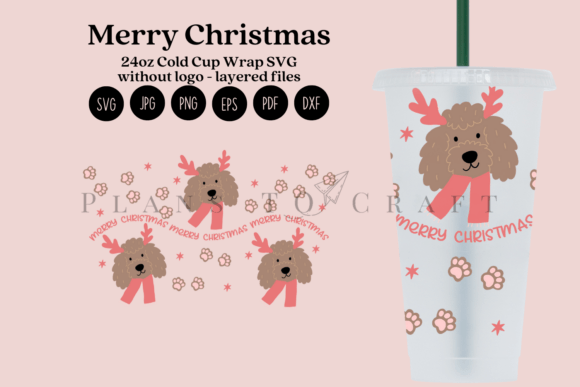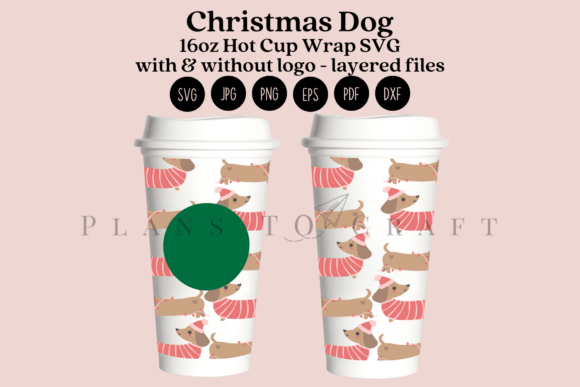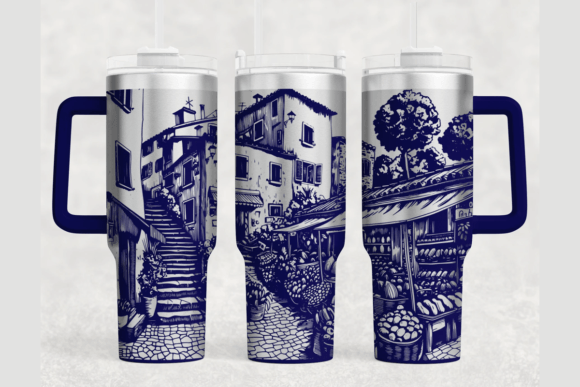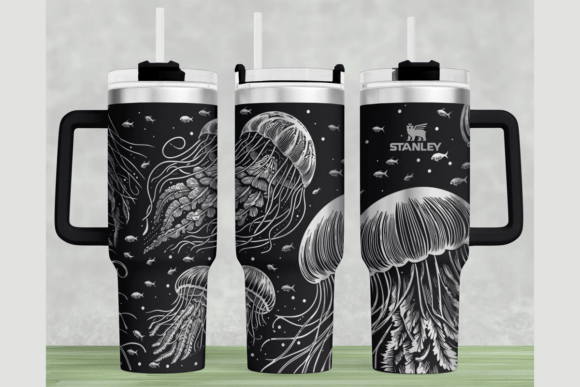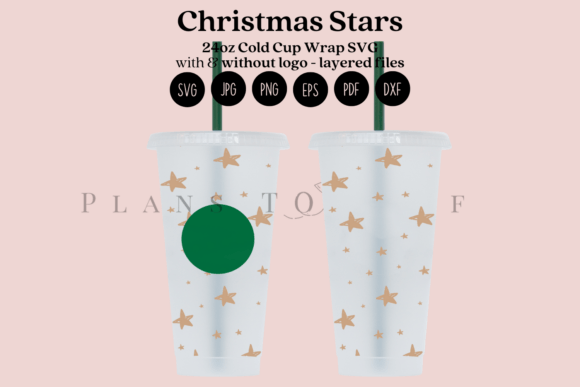
Christmas Stars 24oz Cold Cup Tumbler
A Designer’s First Look: Festive, Clean, and Purpose-Built
When I opened the Christmas Stars 24oz Cold Cup Tumbler files, my first thought wasn’t “cute” or “seasonal”—it was “this has intention.” The layout is centered, balanced, and clearly built for vertical wrap application—not just slapped onto a blank canvas. There’s no extraneous detail, no overcomplicated flourishes. Just crisp star motifs, subtle spacing, and a rhythm that suggests movement without clutter. It feels like a design made by someone who’s actually wrapped a tumbler before—and knows how stretch, seam lines, and grip zones affect final presentation. That matters, especially if you’re stitching this as part of a larger holiday collection or bundling it with embroidered mugs, totes, or baby blankets.
Where This Design Lives Best—And Where It Doesn’t
I tested the Christmas Stars 24oz Cold Cup Tumbler concept across three real projects: a custom embroidered cotton tote for a local boutique, a fleece-lined baby swaddle set, and a small-batch run of linen tea towels for an Etsy shop. On the tote? It translated beautifully—clean satin stitch stars held their shape, and the moderate stitch density kept fabric drape intact. On the swaddle? I scaled it down slightly and used lightweight tear-away stabilizer; the stars read clearly even on soft, brushed cotton. But on the tea towel? That’s where caution kicked in. The open-weave texture caught tiny thread ends near star points, so I added a light topping stabilizer and reduced stitch speed. Not a flaw in the design—it’s a reminder that Christmas Stars 24oz Cold Cup Tumbler is optimized for smooth, stable surfaces first.
It’s not ideal for dense appliqué layers or curved cap fronts without significant redrawing. Tiny corners and sharp star tips can ghost or fray on stretchy knits or thin poly-blends unless stabilized well. And while the file includes layered vector and raster options, the fine outlines don’t hold up on dark fabrics without high-contrast thread—or a white underlay stitch (which isn’t included, so plan accordingly).
Real Embroidery Decisions You’ll Make—Before You Stitch
This isn’t a “drag-and-drop-and-go” embroidery file. It’s a starting point—one that rewards thoughtful prep. Here’s what I do every time:
- Test on scrap fabric first—especially if using textured, dark, or lightweight material. See how star points land, whether fill stitches settle evenly, and how much pushback you get from your hoop.
- Check thread color contrast early. The design relies on clean edges and defined shapes—low-contrast thread choices (like ivory on cream) mute its impact. Go bold: navy on white, forest green on tan, or metallic gold on charcoal.
- Review stitch density before scaling. At full size, it’s balanced—but shrink it below 3.5 inches tall and some interior fills get overly dense. Stretch it beyond 4.5 inches and outlines risk pixelation in raster versions.
- Confirm hoop size compatibility. While the design fits standard 4x4 hoops at original scale, the layered SVG/EPS files let you reposition elements if you’re working with larger hoops or multi-position setups.
- Inspect small details in black-and-white mockups. I always convert a preview to grayscale to spot areas where contrast drops—especially around inner star geometry. What looks sharp on screen may blur when stitched.
- Compare light vs. dark background behavior. The design reads differently on both. On light fabric, it’s cheerful and crisp. On dark, it needs either brighter thread or strategic underlay—don’t assume the default settings will carry it.
What This Design Adds to Your Finished Product—Beyond the Obvious
Using Christmas Stars 24oz Cold Cup Tumbler isn’t just about putting stars on a cup. It’s about signaling care in execution. Customers notice when stars align cleanly, when stitch tension stays consistent across repeated motifs, and when the overall composition feels intentional—not generic. That perception lifts perceived value, especially for handmade products sold on Etsy or at craft fairs. A well-executed version builds trust: “They paid attention to the details—so they’ll pay attention to *my* order.”
For small shop owners, it works quietly as part of a cohesive holiday line—pair it with simple monogrammed napkins or minimalist tree-embroidered aprons, and the brand voice stays warm, refined, and unhurried. For embroidery designers offering custom apparel or personalized gifts, it’s a reliable anchor design: festive but not cloying, scalable but not bland, commercial-ready but still handmade-feeling.
Final Notes for Embroidery Designers & Creative Entrepreneurs
The Christmas Stars 24oz Cold Cup Tumbler is strongest when treated as a *design asset*, not just a decoration. Its layered vector/raster structure means you can isolate stars for patches, simplify outlines for toddler onesies, or extract single motifs for iron-on transfers. Use the PDF for client proofs, the SVG for Cricut-based prep work, and the high-res PNGs for digital mockups that sell.
Remember: this is a graphics file—not a machine embroidery design out of the box. If you’re converting it for embroidery software, check stitch count assumptions, confirm licensing for commercial use (especially if selling finished items or digital bundles), and always test on your target fabric + stabilizer combo. It doesn’t include appliqué instructions or satin-stitch optimization—those are your calls, based on your machine, thread, and audience.
In short: Christmas Stars 24oz Cold Cup Tumbler earns its place in a working designer’s library because it’s focused, flexible, and faithful to its purpose—not flashy, but dependable. And in the world of holiday embroidery, dependable is what gets you through December without frayed nerves or reworked batches.